Diagnostic Imaging For Pets
At Cutting Edge Pet Clinic, we offer advanced in-office diagnostic imaging to help identify medical conditions quickly and guide the best treatment decisions for your pet.
Diagnostic Imaging Services
Accurate diagnosis is the foundation of effective veterinary care. At Cutting Edge Pet Clinic, we provide advanced diagnostic imaging for pets to help identify medical conditions early and guide the best treatment decisions.
Because some health issues cannot be detected through a physical exam alone, imaging allows our veterinary team to safely look inside your pet’s body. As a result, we can diagnose concerns more accurately and move forward with care more efficiently.
Our imaging services allow our veterinary team to look inside the body safely and non-invasively, providing critical insight into your pet’s health when physical exams alone aren’t enough.
In-Office Diagnostic Imaging We Offer
We offer comprehensive diagnostic imaging for pets directly in our clinic, which allows for faster answers and timely treatment—without unnecessary delays or outside referrals.
In-house imaging also means your pet stays in a familiar environment, reducing stress while improving continuity of care.
Digital X-Ray (Radiography)
Digital X-rays are one of the most commonly used diagnostic tools in veterinary medicine. They allow us to evaluate bones, joints, organs, and internal structures with clarity and precision.
X-rays are commonly used to assess:
- Bone fractures or injuries
- Arthritis and joint conditions
- Lung and chest concerns
- Abdominal abnormalities
- Foreign object ingestion
- Dental and skeletal issues
Diagnostic Ultrasound
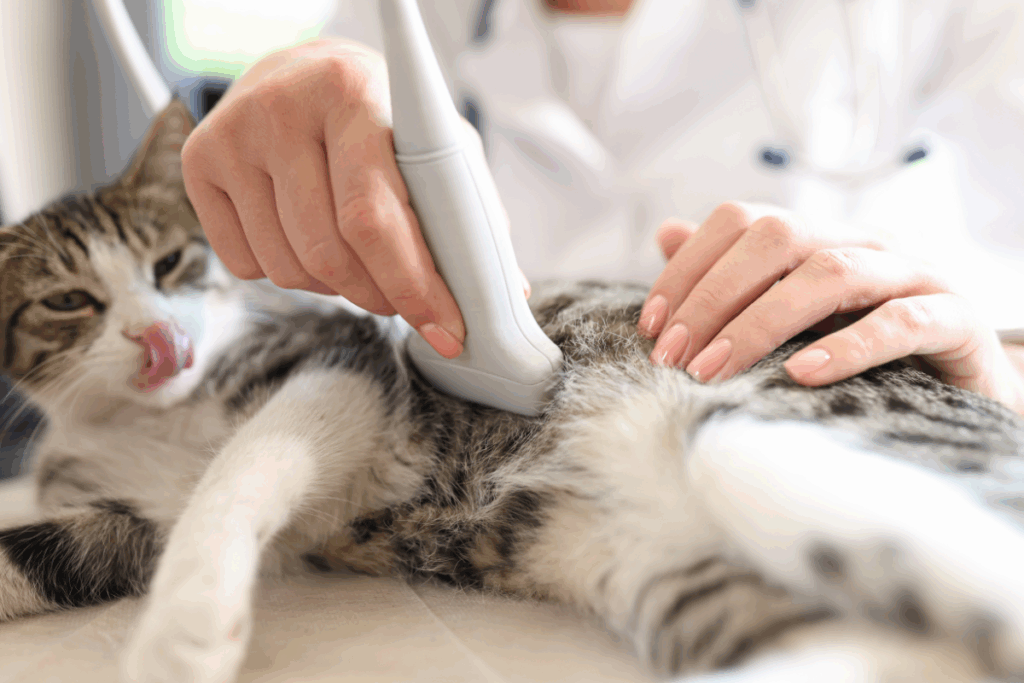
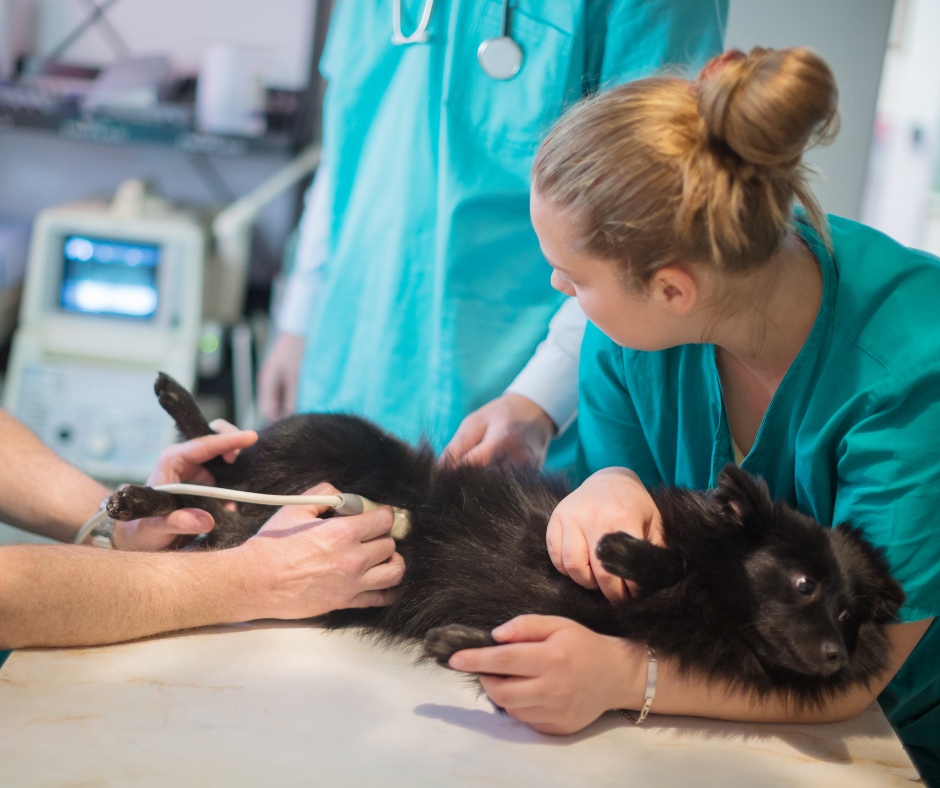
Ultrasound imaging allows us to examine soft tissues and organs in real time. Unlike X-rays, ultrasound provides detailed views of internal organs such as the liver, kidneys, bladder, spleen, and heart-related structures.
Diagnostic imaging may be recommended if your pet is experiencing:
- Lameness or difficulty moving
- Persistent vomiting or diarrhea
- Respiratory symptoms
- Abdominal pain or swelling
- Unexplained weight loss or lethargy
- Suspected injury or trauma
- Chronic or complex medical conditions
Fluoroscopy (Clinical & Surgical)
Fluoroscopy is a specialized imaging technique that provides continuous, real-time X-ray imaging. This advanced technology allows us to observe motion and function inside the body as it happens.
Fluoroscopy may be used for:
- Evaluating swallowing or airway function
- Assessing gastrointestinal movement
- Guiding minimally invasive procedures
- Assisting during surgical interventions
When Is Diagnostic Imaging for Pets Recommended?
Diagnostic imaging may be recommended if your pet is experiencing:
Lameness or difficulty moving
Persistent vomiting or diarrhea
Respiratory symptoms
Abdominal pain or swelling
Unexplained weight loss or lethargy
Suspected injury or trauma
Chronic or complex medical conditions
Imaging allows us to detect issues earlier and tailor treatment plans more effectively.
Benefits of In-Office Diagnostic Imaging
- Faster diagnosis and treatment planning
- Reduced need for outside referrals
- Advanced imaging available in one location
- Improved accuracy for complex conditions
- Less stress for pets and owners
Having imaging available in-house allows us to provide efficient, coordinated care when time and accuracy matter most.
What to Expect During an Imaging Appointment
We understand that diagnostic imaging can feel unfamiliar or concerning for pet owners. Our team is committed to making the process as smooth, comfortable, and stress-free as possible—for both you and your pet.
Initial Review & Consultation
We begin by reviewing your pet’s symptoms, medical history, and any previous test results. This helps us determine which imaging modality—X-ray, ultrasound, or fluoroscopy—is most appropriate and ensures the imaging is focused and efficient.
Gentle Positioning & Preparation
Your pet will be carefully positioned to obtain clear, accurate images while minimizing discomfort. Our trained staff uses calm handling techniques to help your pet feel secure throughout the process.
Sedation When Needed
In some cases, light sedation may be recommended to ensure your pet remains still and comfortable during imaging. This allows us to capture high-quality images safely and reduces stress for your pet. We will always discuss sedation options with you beforehand.
Imaging & Evaluation
Once imaging is complete, our veterinary team reviews the results to assess internal structures, identify abnormalities, and guide diagnosis. Imaging may be used alone or alongside other diagnostics for a complete clinical picture.
Clear Results & Next Steps
We take the time to explain findings in clear, easy-to-understand terms and discuss recommended next steps. This may include treatment options, additional diagnostics, or follow-up care if needed.
Comfort & Safety First
Your pet’s comfort and safety are our top priorities at every stage of the imaging process. From preparation through completion, we focus on gentle care, careful monitoring, and clear communication with you throughout the visit.
Compassionate, Expert Care You Can Trust
Our veterinary team uses diagnostic imaging as part of a comprehensive approach to your pet’s health. We take the time to explain results clearly and discuss treatment options so you can make informed decisions with confidence.
Diagnostic Imaging FAQs
What is the difference between X-ray and ultrasound?
X-rays are best for evaluating bones, joints, lungs, and certain abdominal structures, while ultrasound is ideal for examining soft tissues and organs such as the liver, kidneys, bladder, and spleen. Your veterinarian will recommend the most appropriate option based on your pet’s condition.
Will my pet need sedation for imaging?
Some imaging procedures require your pet to remain very still for accurate results. In these cases, light sedation may be recommended to reduce stress and ensure safety. Sedation is not always required and will be discussed with you beforehand.
Will I get results the same day?
In many cases, results can be reviewed the same day. Some imaging studies may require additional interpretation or consultation, and your veterinarian will discuss timing and next steps with you.
Do I need to prepare my pet for an imaging appointment?
Preparation depends on the type of imaging being performed. We will provide specific instructions ahead of your appointment, such as fasting guidelines if sedation is planned.
Schedule Diagnostic Imaging for Your Pet
If your pet needs diagnostic imaging or has symptoms that require further evaluation, our team is here to help.