Cryosurgery for Dogs
A minimally invasive treatment using controlled cold therapy to remove abnormal tissue safely and effectively.

A Modern, Minimally Invasive Solution for Your Pet’s Health
Cryosurgery for dogs is an advanced veterinary treatment that uses extreme cold to treat abnormal or diseased tissue without the need for traditional surgical incisions. At Cutting Edge Pet Clinic in San Antonio, our veterinarians use modern cryogenic techniques to provide precise care while prioritizing your pet’s comfort.
During treatment, liquid nitrogen or another cryogenic agent is applied directly to the affected area. As a result, the targeted tissue freezes and gradually breaks down over time. Meanwhile, the surrounding healthy tissue remains largely unaffected, allowing natural healing to take place. Because of this precision, cryosurgery often results in less discomfort and a shorter recovery period for many dogs.
Benefits of Cryosurgery for Dogs
Minimally Invasive
Cryosurgery does not require surgical incisions, resulting in less pain, minimal bleeding, and reduced recovery time.
Precise & Controlled Treatment
Only the targeted tissue is treated, helping preserve surrounding healthy skin and structures.
Lower Risk of Infection
The freezing process helps reduce bacterial contamination, lowering the risk of post-treatment infection.
Quick Recovery
Most dogs can return home the same day and experience minimal discomfort during recovery.
Cost-Effective Option
Cryosurgery is often more affordable than traditional surgery and typically requires fewer follow-up visits.
Versatile Treatment
Suitable for a range of conditions, including benign growths and select malignant lesions.
What Is Cryosurgery?
Cryosurgery, also known as cryotherapy, is a procedure that destroys abnormal tissue through carefully controlled freezing. Veterinarians commonly use this technique to treat certain superficial skin conditions and growths when traditional surgery may be unnecessary or too invasive.
Because cryosurgery for dogs focuses only on the affected area, it helps preserve surrounding healthy skin. For this reason, it offers a gentler treatment option for many pets while still providing effective results.
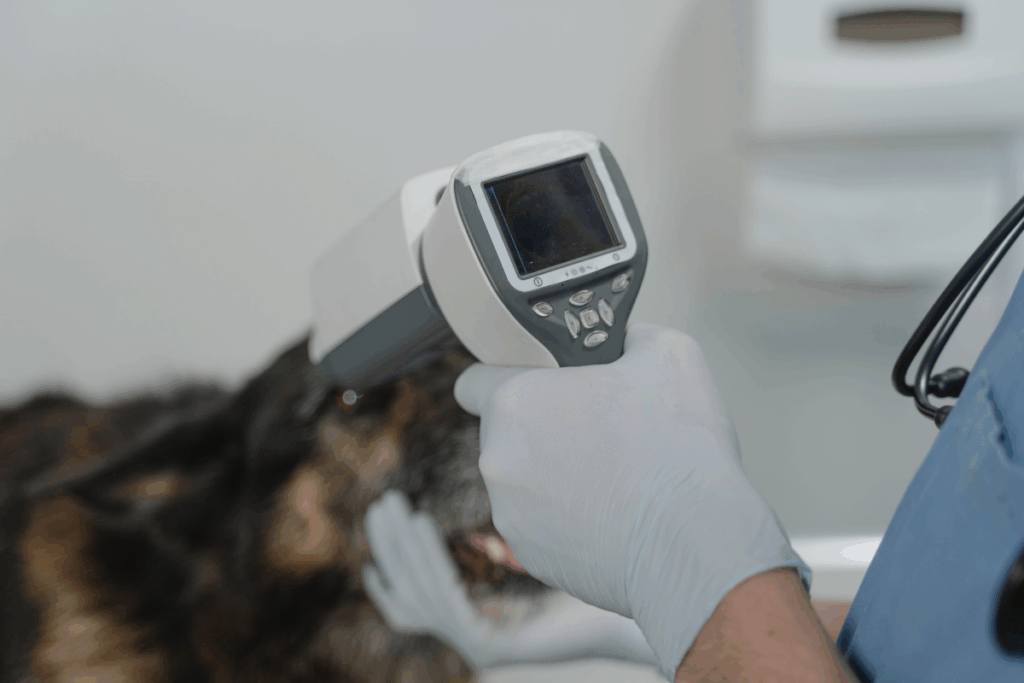
When Is Cryosurgery for Dogs an Appropriate Treatment?
We may reccomend cryosurgery for dogs with:
- Benign skin tumors
- Certain malignant skin tumors
- Warts or cysts
- Small, superficial growths
- Lesions in areas where traditional surgery may be difficult or too invasive
Your veterinarian will evaluate the size, location, and nature of the lesion to determine whether cryosurgery is an appropriate treatment option.
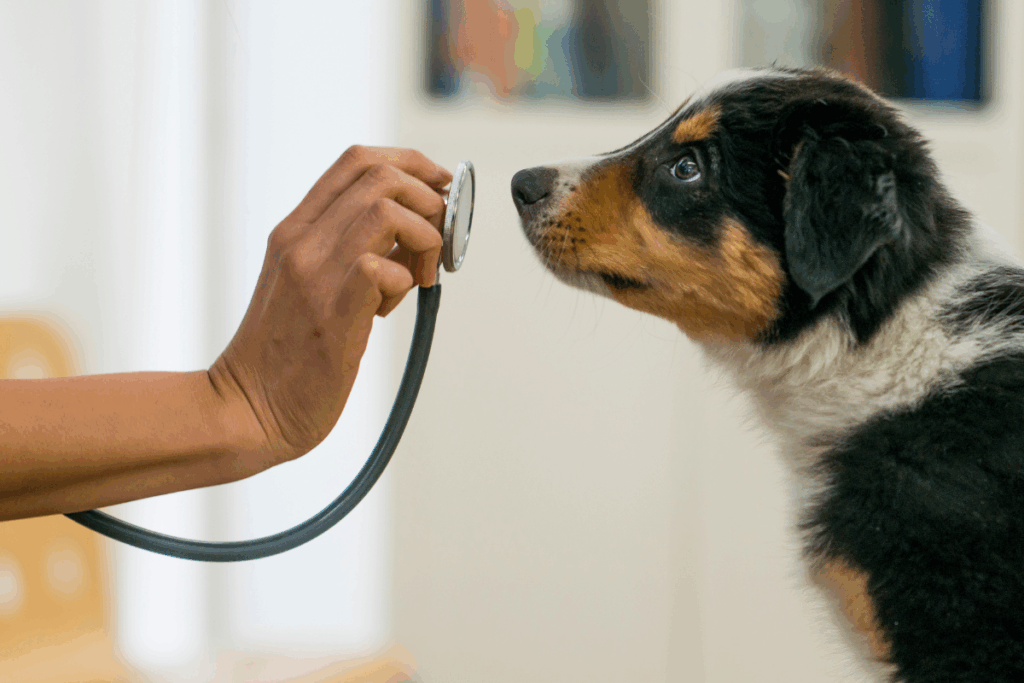
What to Expect During a Cryosurgery Procedure
Cryosurgery is typically performed using local anesthesia or light sedation to ensure your pet’s comfort.
During the procedure:
The treatment area is prepared and isolated
A cryogenic agent is applied directly to the targeted tissue
The tissue is frozen in a controlled manner
The procedure is completed quickly with minimal discomfort
Over time, the frozen tissue will naturally die and slough off, allowing healthy skin to heal and regenerate.
Recovery and Aftercare Following Cryosurgery
After cryosurgery, it is normal for the treated area to change in appearance as healing progresses.
You may notice:
- Redness at the treatment site within a few days
- The area darkening, scabbing, or crusting
- Gradual necrosis of the treated tissue
- The lesion falling off naturally over time
Depending on the condition being treated, cryosurgery is sometimes performed over a series of visits rather than a single session. Treatment plans are tailored to each patient, but many dogs require no more than a few sessions, usually scheduled a couple of weeks apart, to allow the tissue to heal and respond appropriately.
Frequently Asked Questions About Cryosurgery for Dogs
What are the possible side effects of Cryosurgery for dogs?
After cryosurgery, it is normal for the treated area to change in appearance as healing progresses.
You may notice:
Redness at the treatment site within a few days
The area darkening, scabbing, or crusting
Gradual necrosis of the treated tissue
The lesion falling off naturally over time
In some cases, multiple cryotherapy treatments may be needed—typically up to four sessions spaced 2–4 weeks apart, depending on the condition and response to treatment.
What's better, cryosurgery vs. traditional surgery?
When comparing cryosurgery to traditional surgery, the best option depends on your dog’s specific condition. However, cryosurgery often provides several advantages for appropriate cases.
Key differences to consider
First, cryosurgery typically involves a lower overall cost and fewer follow-up visits. In addition, because the procedure does not require incisions, dogs often experience a shorter recovery period and less post-treatment discomfort.
Treatment approach
By contrast, traditional surgery may be necessary for larger, deeper, or more complex lesions. However, cryosurgery avoids many of the risks associated with more invasive surgical procedures, such as sutures and longer healing times.
For this reason, veterinarians often recommend cryosurgery when a minimally invasive option is appropriate.
Does cryosurgery require stitches?
No. Cryosurgery does not involve surgical incisions, so stitches are not needed. The treated tissue naturally heals and falls away over time.
How long does it take for the treated area to heal?
Healing time can vary depending on the size, location, and type of lesion being treated. However, most dogs follow a predictable healing pattern.
Typical healing timeline
In many cases, the treated area begins to scab within a few days. Over the following weeks, the tissue gradually heals as new, healthy skin forms underneath.
What to expect
As healing progresses, the scab will eventually fall away naturally. Because each dog heals at a different pace, your veterinarian will monitor progress and provide guidance as needed.
Will my pet be uncomfortable after cryosurgery?
Most pets experience minimal discomfort. Mild redness, swelling, or sensitivity at the treatment site is normal and typically short-lived. Pain medication is rarely needed.
How many cryosurgery treatments will my pet need?
Some lesions respond well to a single treatment, while others may require multiple sessions. In many cases, 2–4 treatments spaced 2–4 weeks apart are recommended for complete resolution.
Schedule a Cryosurgery Consultation
If your dog has a skin lesion, growth, or condition that may benefit from cryosurgery, our veterinary team is here to help.