Can Cats Be Trained? What Pet Owners Need to Know
When people think about training pets, dogs usually come to mind first. Cats, on the other hand, have a reputation for being independent, stubborn, or simply uninterested in following commands. This leads many pet owners to ask an important question: can cats be trained?
The short answer is yes — cats absolutely can be trained. However, the way cats learn, respond to motivation, and communicate is very different from dogs. Understanding these differences is the key to successful cat training and building a stronger bond with your feline companion.
Understanding How Cats Learn
To understand whether cats can be trained, it helps to understand how they think. Cats are highly intelligent animals with strong problem-solving skills. In the wild, their survival depends on learning patterns, reading their environment, and adapting quickly.
Unlike dogs, cats were never bred to work alongside humans in packs. This means they are more independent and selective about what motivates them. Training a cat isn’t about dominance or obedience — it’s about cooperation, trust, and positive reinforcement.
Cats learn best when:
- The reward is immediate
- The training sessions are short
- The behavior benefits them directly
- Stress and punishment are avoided
Can Cats Be Trained to Follow Commands?
Yes, cats can be trained to follow simple commands, especially when food, play, or affection is involved. While most cats won’t respond to training in the same way dogs do, many can learn commands such as:
- Sit
- Come when called
- High five or paw
- Jump onto a surface
- Go to a specific location (like a mat or bed)
Training success depends on consistency and understanding your cat’s personality. Some cats are food-motivated, while others respond better to play or praise.

Litter Box Training and House Manners
One of the clearest examples that answers “can cats be trained” is litter box use. Most cats instinctively use a litter box, but proper placement, cleanliness, and consistency reinforce this behavior.
Cats can also be trained to develop good house manners, such as:
- Using scratching posts instead of furniture
- Staying off kitchen counters
- Respecting boundaries in the home
Redirecting unwanted behavior works better than punishment. For example, placing double-sided tape on surfaces or offering more appealing alternatives can discourage behaviors without causing stress.
Clicker Training for Cats
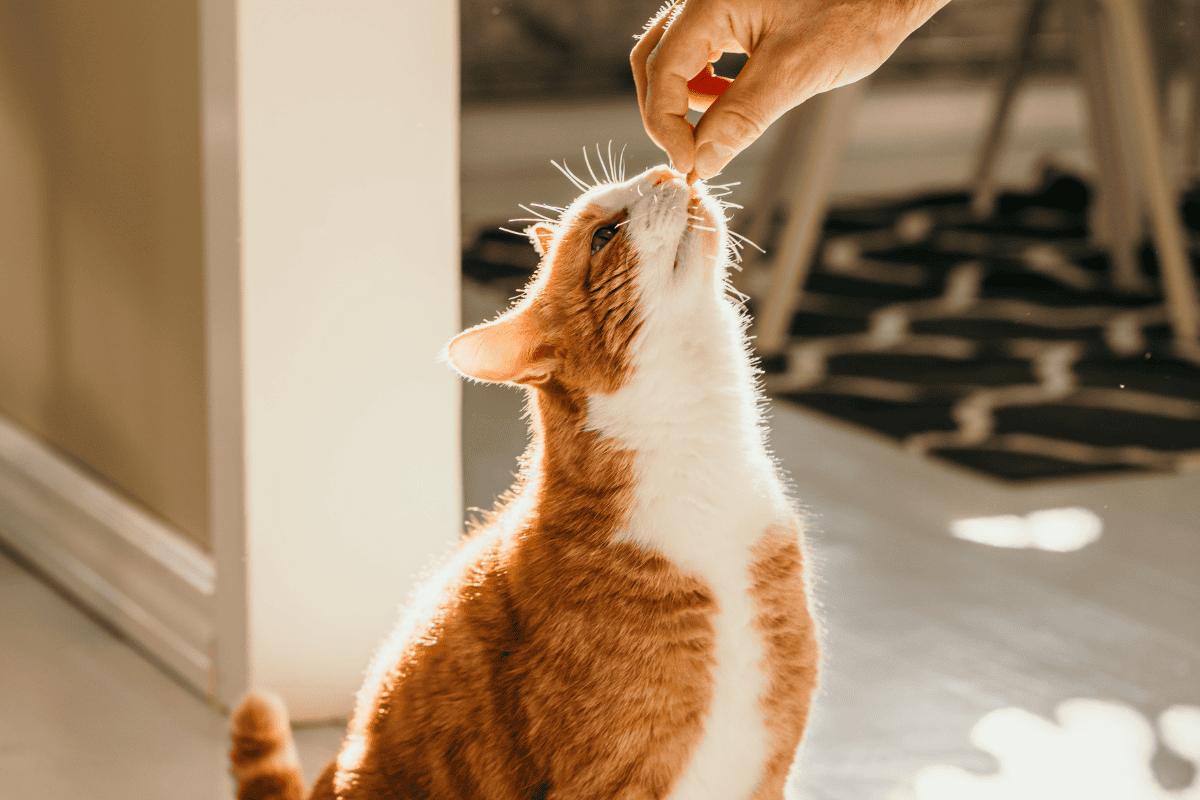
Clicker training is one of the most effective ways to train cats. This method uses a small clicking sound to mark the exact moment your cat performs a desired behavior, followed by a reward.
Clicker training works because:
- It provides clear communication
- It reinforces positive behavior
- It helps cats understand cause and effect
Over time, cats learn to associate the click with success, making it easier to shape new behaviors. Clicker training is commonly used for tricks, confidence building, and behavior modification.
Can Cats Be Trained to Walk on a Leash?
Many cat owners are surprised to learn that cats can be trained to walk on a leash and harness. While not every cat enjoys it, some thrive with supervised outdoor exploration.
Leash training should always be introduced slowly:
- Start with a comfortable harness indoors
- Allow your cat to wear it without pressure
- Introduce the leash gradually
- Keep sessions calm and positive
This type of training can provide enrichment, mental stimulation, and safe outdoor exposure for curious cats.
Training for Behavioral Issues
Training isn’t just about tricks — it’s also an important tool for managing behavioral issues. Cats can be trained to reduce or eliminate behaviors such as:
- Excessive scratching
- Aggression or fear responses
- Inappropriate elimination
- Overstimulation during play
Behavioral training works best when combined with environmental changes and, in some cases, veterinary guidance. Medical issues can sometimes cause sudden behavior changes, so it’s important to rule those out first.
What Doesn’t Work When Training Cats
While cats can be trained, certain approaches are ineffective and can damage trust:
- Punishment or yelling
- Physical correction
- Long, repetitive training sessions
- Inconsistent reinforcement
Cats respond poorly to fear-based methods. Instead of learning the desired behavior, they may become anxious or avoidant, making training more difficult in the long run.
How Long Does It Take to Train a Cat?
Training a cat is not about speed — it’s about consistency. Some cats pick up behaviors quickly, while others take more time. Short, daily sessions of just a few minutes are often more effective than longer sessions.
Progress may be gradual, but even small improvements indicate learning. Patience and realistic expectations are essential when answering the question, “can cats be trained?”
Strengthening the Human-Cat Bond Through Training
One of the biggest benefits of training is the bond it creates between you and your cat. Training builds trust, improves communication, and provides mental stimulation that many indoor cats lack.
Cats that engage in training often:
- Show increased confidence
- Experience less boredom
- Develop stronger relationships with their owners
- Exhibit fewer behavioral issues
Training is not about controlling your cat — it’s about working together.
Final Thoughts: Can Cats Be Trained?
So, can cats be trained? Absolutely. While cats may never behave exactly like dogs, they are capable learners with unique personalities and motivations. With patience, positive reinforcement, and respect for their independence, training can be both successful and rewarding.
Whether you’re teaching basic commands, addressing unwanted behaviors, or simply enriching your cat’s daily routine, training can improve quality of life for both you and your feline companion.
Have Questions About Your Cat’s Behavior?
If you have questions about your cat’s behavior, training challenges, or overall wellness, our veterinary team is here to help. Schedule an appointment today to get personalized guidance and ensure your cat is happy, healthy, and thriving.